Benefits of Strength Training: What It Can Do for You
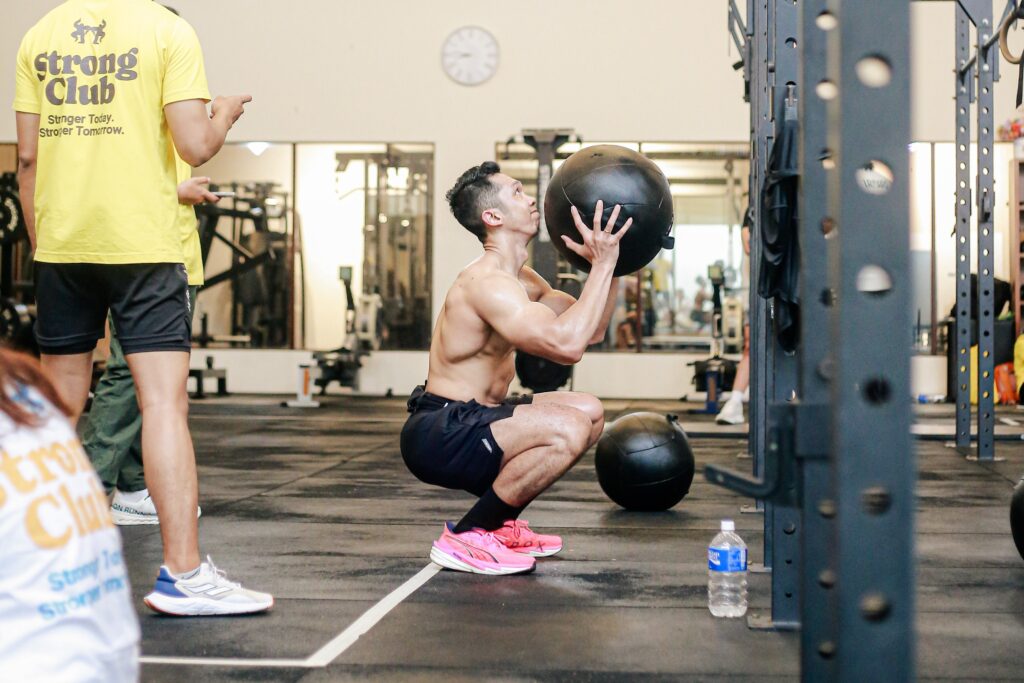
You may already know that strength training can make you stronger. But what does that strength actually help you do?
It may make carrying groceries feel more manageable, help you get up from the floor with greater confidence, or allow you to repeat physical tasks without your body tiring as quickly. For someone training for sport, it may support the ability to produce force, control movement, and keep working when fatigue begins to build.
These practical outcomes are part of the wider benefits of strength training.
Strength training can support muscle function, movement quality, stability, work capacity, physical confidence, and long-term capability. The results will depend on the individual, the way training is structured, consistency, recovery, and how closely the training matches the person’s goals. If you are new to the topic, start with what strength training is and how it works before exploring its potential benefits.
It is more useful to view strength training as a way to build physical capacity than as a quick solution or guarantee of a particular body shape.
It Can Help You Produce and Control More Force
The most direct benefit of strength training is an improved ability to produce and control force.
Force is involved whenever you push, pull, lift, carry, climb, stand up, or change position. A stronger body may be better prepared to manage these demands, whether they occur during exercise, work, sport, or everyday life.
Think of physical strength like the capacity of a bridge. The bridge does not need to operate at its absolute limit every day. What matters is having enough capacity that ordinary demands do not constantly feel like maximum efforts.
Strength training may help you:
- Lift an object from the floor
- Carry a bag or suitcase
- Push open a heavy door
- Pull an object toward you
- Rise from a chair or the floor
- Move through a demanding training session
- Maintain better control when a task becomes difficult
Getting stronger does not always mean lifting the heaviest possible load. It may mean that a familiar task requires less effort or that you can perform it with more control.
For a broader explanation of how resistance creates a training stimulus, read how strength training works.
It Can Support Muscle Function and Physical Capacity
Muscles do more than create visible shape. They help you maintain posture, control joints, absorb force, stabilise the body, and produce movement.
Regular resistance exercise gives the muscles a reason to keep working against a challenge. Over time, this may support muscle strength and function, although the response will differ from person to person.
Physical capacity is the amount of useful work your body can handle. It includes more than the maximum weight you can lift. It may also involve how long you can walk, how steadily you can climb stairs, or how well you can repeat a task without losing control.
A person with greater physical capacity may find that they have more options during the day. They can take the stairs, carry equipment, play with their children, or complete household tasks without every movement feeling unnecessarily demanding.
This does not mean that strength training removes fatigue or makes every physical task easy. It means that consistent training may help improve the relationship between the demands of a task and the capacity available to handle it.
It Can Make Everyday Movement More Manageable
One of the most useful benefits of strength training is how it can translate into ordinary movements.
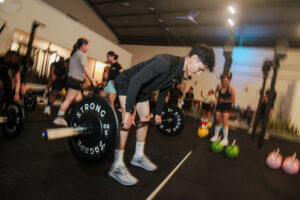
Many daily activities involve the same broad patterns trained in the gym:
- Squatting to sit down or pick something up
- Hinging to lift an object
- Pushing and pulling doors or equipment
- Carrying items from one place to another
- Stepping up onto a surface
- Getting up from the floor
- Reaching while maintaining balance
Training these patterns does not guarantee that everyday movement will always feel easy. However, it can give you opportunities to practise producing force and controlling your body in a structured environment.
The value is often found in the repetition. You are not only completing one exercise, you are developing familiarity with movements that appear in different forms throughout daily life.
MENTOR TIPS
“Strength is useful when it carries over into everyday life. It’s not just about how much you can lift, but how well you can control your movement, handle daily tasks, and build confidence in what your body can do.”
Rizaldy, Still Strong Mentor
This is especially relevant for people who want to stay physically capable as they age. Maintaining the ability to lift, carry, climb, and change position can support independence and confidence in everyday tasks.
It Can Support Movement Quality and Stability
Strength and movement quality are closely connected, but they are not exactly the same.
Strength is the ability to produce force. Movement quality is how well you organise and control that force during a task.
A person may have enough strength to perform a movement but still need to improve balance, coordination, mobility, or control. Strength training can provide a structured way to practise these qualities together.
For example, a split squat may challenge:
- Leg strength
- Hip stability
- Balance
- Trunk control
- Coordination between both sides of the body
A loaded carry may involve grip strength, posture, breathing, balance, and the ability to maintain control while walking.
The exercise itself is only part of the benefit. The way you perform it also matters. A manageable load, appropriate range of motion, and controlled technique may be more useful than adding resistance before the movement is ready.
It May Support Bone Health
Bones respond to the physical demands placed on them. Weight-bearing activity and resistance exercise can form part of a broader approach to supporting bone health.[1]
Strength training may expose the body to forces that are different from those experienced during seated or low load activities. Exercises such as squats, step ups, carries, and appropriately selected resistance movements can place controlled demands on the body.
The response will vary according to factors such as age, training history, exercise selection, nutrition, medical status, and hormonal health. Strength training should not be presented as a treatment for osteoporosis or as a guarantee against fractures.
A qualified professional can help adapt exercise for someone with an existing bone condition, injury history, or other health concern.
The practical point is that maintaining strength and physical activity can be part of supporting the body’s ability to handle everyday loading. This is one reason resistance exercise may be useful across different stages of life, not only for younger athletes.
It Can Develop Muscular Endurance and Work Capacity
Strength is not only about producing one strong effort. Many activities require you to keep producing useful work over time.
Muscular endurance is the ability of a muscle or group of muscles to continue working through repeated efforts. Work capacity is a broader idea that includes how much quality work you can complete before fatigue reduces your performance.
A person with better work capacity may be able to:
- Complete several rounds of a training session
- Maintain technique during repeated exercises
- Work through a physically demanding shift
- Carry or move objects several times
- Continue running, lifting, or changing direction during sport
The training approach may be different from maximum strength work. Lighter loads, repeated efforts, shorter rest periods, and more movement variety may be useful depending on the goal.
What happens when fatigue begins to affect your technique? This is where strength training, conditioning, and recovery need to be considered together. The aim is not simply to keep working until form breaks down, but to build the ability to repeat quality efforts.
It Can Support Athletic and Sport Performance
Athletic performance often depends on the ability to produce force, absorb force, change direction, accelerate, decelerate, and repeat efforts.
Strength training may support these qualities by developing a stronger physical foundation. For example, a runner may benefit from stronger legs and better control during ground contact. A field sport athlete may need strength for acceleration, deceleration, contact, and repeated changes of direction.
For someone training for HYROX or another functional fitness event, strength may be combined with running, carries, pushing, pulling, and conditioning. In that context, the goal is not only to lift a heavy load once. It is to perform different tasks while managing fatigue.
Strength training does not replace sport specific practice. Instead, it may complement the technical, tactical, and conditioning demands of the sport.
Still Strong Performance is the more relevant training destination when the focus is group conditioning, performance training, work capacity, or HYROX preparation.
It Can Support Healthy Aging and Long Term Capability
Physical capability can change over time. Without regular activity, tasks that once felt automatic may gradually become more demanding.
Strength training may help people continue practising the abilities needed for daily life, including standing, walking, carrying, balancing, and changing position. The World Health Organization recognises that muscle strengthening activity benefits people across age groups, while regular physical activity is associated with improved health outcomes in adults and older adults.[2]
Healthy aging is not about trying to move like you did at a different age. It is about supporting the abilities that help you participate in your life now and in the years ahead.
Training for healthy aging may include:
- Lower body strength
- Balance and stability
- Trunk control
- Mobility
- Grip and carrying ability
- Confidence with everyday movement
- Appropriate recovery between sessions
The exercises and loads should be adapted to the individual. A person who is new to resistance training may need a different starting point from someone with years of experience.
Training Lab is the more natural destination for people looking for individualised strength development, movement support, mobility, recovery, and long-term physical capability.
It Can Build Confidence in Physical Tasks
Confidence is not a substitute for strength or skill, but it can influence whether someone chooses to participate in physical activities.
When people practise a movement in a controlled setting, they may become more familiar with what their body can do. Completing a squat, carrying a load, or learning a new movement can provide useful feedback about current ability.
This does not mean every session should feel easy or that confidence must come from constantly increasing the load. Confidence can also come from:
- Understanding how to modify an exercise
- Knowing how to manage fatigue
- Learning what a controlled effort feels like
- Becoming more comfortable with unfamiliar movements
- Recognising when to ask for coaching
- Seeing gradual progress over time
A supportive training environment can make this process more approachable. The goal is not to compare your performance with someone else’s, but to develop a clearer understanding of your own starting point and progress.
How Does Consistent Training Affect the Outcome?
The potential benefits of resistance exercise are connected to consistency. A single session can provide useful practice, but longer-term changes usually require repeated exposure to an appropriate challenge.
Consistency does not mean training as often as possible. It means finding a realistic rhythm that fits your schedule, goals, recovery capacity, and current physical condition.
Health guidelines commonly recommend muscle-strengthening activity on at least two days each week for adults, alongside aerobic activity.[3] However, this does not describe the ideal programme for every person or every goal.
Someone training for general health may use a different schedule from someone preparing for a competition. A person with a physically demanding job may need to manage training fatigue differently from someone who spends most of the day sitting.
The amount and frequency of training should also account for sleep, nutrition, stress, other activities, and previous training experience. For a more detailed discussion, read how often you should do strength training.
What Determines the Benefits You Experience?
The potential benefits of strength training are influenced by several factors:
- Your current training level
- The quality of your technique
- The exercises you choose
- The amount of work you perform
- How consistently you train
- How well you recover
- Your nutrition and sleep
- Whether the programme matches your goals
- Any health conditions or previous injuries
This is why the same programme may not produce the same experience for two people.
A beginner may first notice improved coordination and confidence. An experienced lifter may focus on producing more force. An athlete may notice better performance under fatigue. An older adult may value being able to perform everyday tasks with less hesitation.
The most useful question is not always, “How much weight did I lift?” It may be, “What can I do now with better control, less effort, or more confidence?”
Strength That Carries Into Everyday Life
The benefits of strength training extend beyond building muscle or lifting heavier weights.
Regular resistance exercise may support force production, muscle function, movement quality, stability, bone health, muscular endurance, work capacity, athletic performance, healthy aging, and confidence in physical tasks.
These benefits matter because strength is used in real life. It helps you lift, carry, push, pull, climb, run, change position, and continue participating in the activities that matter to you.
The most effective approach is usually one that matches your current ability and can be repeated consistently. You do not need to train like an athlete to gain value from structured strength work, and you do not need to pursue maximum loads for every benefit to be relevant.
When you are ready to put these principles into practice, explore Still Strong’s training formats and consider whether individualised coaching, performance focused training, or a combination of both fits your goals.
Footnotes
- National Institute of Arthritis and Musculoskeletal and Skin Diseases, “Exercise for Your Bone Health”. The resource discusses weight-bearing and strength-training exercises as part of bone-health support.
- World Health Organization, “Physical Activity”. WHO notes that muscle-strengthening benefits people across age groups and that regular physical activity is associated with several health and functional outcomes.
- Centers for Disease Control and Prevention, “Adult Activity: An Overview”. The CDC recommends muscle-strengthening activities on at least two days per week for adults, involving all major muscle groups.