What Is Strength Training? A Beginner’s Guide
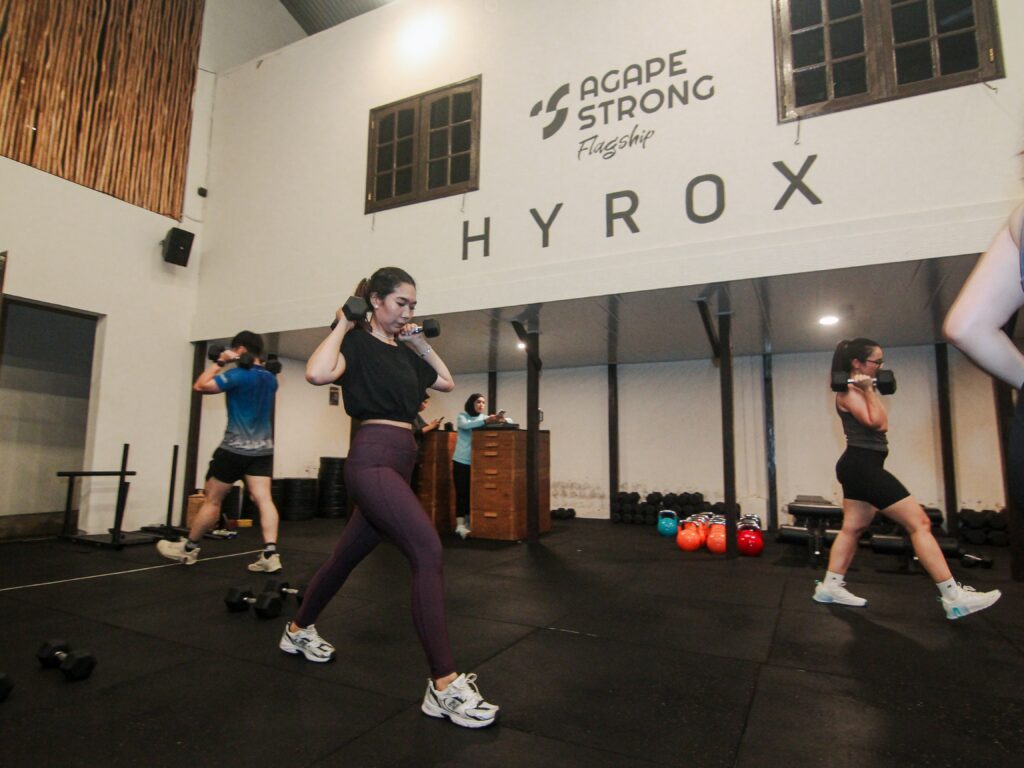
It Can Make Everyday Movement More Manageable. You may know that strength training is good for you, but knowing where to start is another question. Does it mean lifting heavy weights? Is it mainly for building muscle? Or can bodyweight exercises, resistance bands, and kettlebells also count?
Strength training is a broad approach to exercise that challenges your muscles to produce force against resistance. That resistance may come from free weights, machines, cables, bands, your own body weight, or an external object such as a kettlebell.
The goal is not simply to make an exercise feel difficult. It is to give your body a clear and manageable reason to adapt.
A useful way to think about strength training is like learning to carry a heavier suitcase. You begin with a weight you can control, practise the movement, and gradually build your capacity over time. The suitcase may be a dumbbell, a barbell, a resistance band, or your own body moving through space.
Strength training can support everyday movement, sport, performance, and long-term physical capability. How it looks will depend on your goals, training experience, available equipment, and current physical capacity.
What Does Strength Training Actually Mean?
Strength training is the practice of using resistance to challenge the body’s ability to produce and control force.
That definition is intentionally broad. Strength training does not belong to one particular type of gym, one piece of equipment, or one type of person. It can be adapted for someone who is new to structured exercise, someone returning after a long break, an athlete preparing for competition, or an older adult focused on staying physically capable.
The resistance creates a training stimulus. In simple terms, your body has to respond to a physical task that is more demanding than complete rest. Over time, consistent exposure to an appropriate challenge can help you become more capable at that task.
That capability may involve:
- Lifting or carrying more weight
- Controlling your body through a larger range of motion
- Performing an exercise with better technique
- Repeating an effort without losing movement quality
- Producing force more quickly
- Maintaining balance and stability
- Completing everyday tasks with greater confidence
Getting stronger does not always mean lifting heavier. It may also mean controlling a movement more effectively or producing the same effort with less unnecessary fatigue.
How Does Strength Training Work?
Every strength session creates a stimulus. The muscles, joints, nervous system, and coordination required for the movement all have to respond to the challenge.
For example, a squat may require your legs to produce force while your trunk remains organised. A row may challenge the muscles of your back while you control the position of your shoulders. A loaded carry may require strength, balance, grip, posture, and the ability to keep moving under load.
The body responds to the specific demands placed on it. This is why the same exercise can be used for different goals, but with different programming.
A person focused on general physical capability may use a manageable load and focus on control. An athlete may use a more demanding variation, higher speed, or shorter rest periods. The movement may look similar, but the training purpose is different.
The key is to match the challenge to the person and the goal.
MENTOR TIPS
“Good strength training isn’t about lifting the heaviest weight you can. It’s about understanding where you are, learning to move well, and building from there. The right starting point is different for everyone.”
William, Still Strong Mentor
What Counts as Strength Training?
Strength training exercises can use many types of resistance. There is no single piece of equipment that makes an exercise effective.
Bodyweight Exercises
Bodyweight exercises use your own mass as resistance. Common examples include:
- Squats
- Split squats
- Lunges
- Step ups
- Push ups
- Glute bridges
- Planks
- Pull ups or assisted pull ups
Bodyweight training is not automatically easy. The challenge can change depending on the position, range of motion, tempo, balance, leverage, and number of repetitions.
For example, a controlled single leg exercise can require more balance and coordination than a basic two leg variation. A push up performed from an elevated surface may be an appropriate starting point, while a floor push up may be a later progression.
Free Weights
Free weights include dumbbells, barbells, kettlebells, and other objects that can be moved through space.
Examples include:
- Goblet squats
- Deadlifts
- Dumbbell presses
- Rows
- Kettlebell swings
- Loaded carries
- Step ups with dumbbells
Free weights can develop strength while requiring you to control the position of the load. They also allow the resistance to be adjusted gradually, which can be useful when a programme calls for progressive training.
Machines, Cables, and Resistance Bands
Machines and cables can provide a stable setup and allow someone to focus on producing force through a particular movement. Resistance bands can provide a portable training option and may be useful for warm ups, accessory exercises, or home training.
One option is not automatically better than another. The right choice depends on the person, the exercise, the goal, the coaching environment, and what can be performed safely and consistently.
The Main Training Variables to Understand
Strength training becomes easier to understand when you see it as a set of adjustable variables rather than a random collection of exercises.
Technique
Technique refers to how you organise and control a movement. There is not always one perfect way for every person to perform an exercise. Individual body structure, movement experience, mobility, and training goals can all influence how a movement should look.
A useful standard is whether the exercise is appropriate for the individual, controlled enough for the goal, and repeatable without unnecessary strain.
Technique may also change as the load, speed, range of motion, or fatigue level changes. A movement performed well at a light load may require further coaching when the load increases.
Volume
Volume describes how much work you perform. It can include the number of sets, repetitions, exercises, or total load used during a session or training week.
More volume is not automatically better. A useful amount is one that creates a meaningful stimulus while remaining manageable enough to recover from.
Someone new to structured training may progress with a relatively small amount of well performed work. Adding more exercises simply to make a session longer does not always improve the result.
Intensity
Intensity describes how demanding the exercise is.
In strength training, intensity can refer to the load being lifted, how close a set is to your current limit, or the speed and complexity of the movement. A heavy deadlift and a high repetition bodyweight circuit may both feel difficult, but they place different demands on the body.
The appropriate intensity depends on the intended outcome. Strength, muscular endurance, power, general fitness, and performance may require different approaches.
Frequency
Frequency refers to how often you train.
Your ideal training frequency may depend on your goal, experience, schedule, recovery capacity, and the amount of work completed during each session.
General activity guidelines commonly recommend muscle strengthening activity on at least two days each week for adults, involving the major muscle groups.[1] This is a broad public health recommendation rather than a complete programme for every individual.
How often you train should also consider work, sleep, other physical activities, and how well you recover between sessions. For a more detailed discussion, read how often should you strength train?.
Recovery
Think of training as the stimulus and recovery as the time your body has to respond to it.
Sleep, nutrition, rest between sessions, stress, and daily activity can all affect recovery. If you increase training without allowing enough time to adapt, fatigue may accumulate faster than your capacity improves.
Recovery is not separate from training. It is part of the process that allows you to return and perform quality work again.
What Is Progressive Overload?
Progressive overload means gradually increasing the challenge of training so your body has a reason to continue adapting.
Think of it like adding steps to a staircase rather than trying to jump to the top.
Progression may involve:
- Adding a small amount of load
- Performing more repetitions with the same load
- Completing an additional set
- Using a more challenging exercise variation
- Improving range of motion
- Increasing control or reducing unnecessary momentum
- Moving with more speed when power is the goal
- Repeating the same workload with better technique
Progressive overload does not mean pushing harder in every session. It means increasing the challenge in a planned and manageable way.
Professional guidance on resistance training emphasises that progression should be adjusted according to a person’s goals, physical capacity, and training status.[2] A beginner may progress through improved control and consistency before needing significant changes in load.
How Does Strength Training Change Based on Your Goal?
Strength training is not one fixed method because strength can be expressed in different ways.
Someone focused on general fitness may train squats, hinges, pushes, pulls, carries, and trunk exercises to develop a balanced foundation.
Someone training for athletic performance may place more emphasis on power, speed, unilateral exercises, conditioning, or the ability to repeat efforts under fatigue.
Someone preparing for a HYROX style event may combine strength training with running, functional movements, and endurance work.
An older adult may focus on strength, balance, mobility, and the ability to perform everyday activities with confidence.
The exercises may overlap, but the programme design and emphasis can change significantly. This is why copying another person’s workout does not necessarily create the same outcome for you.
A Simple Starting Framework
The good news is that you do not need a complicated programme to start building strength.
A useful starting point is to learn a few fundamental movement patterns and practise them consistently. A beginner friendly session may include:
- A squat pattern – such as a box squat or goblet squat
- A hinge pattern – such as a hip hinge or light deadlift variation
- A push – such as a wall push-up, incline push up, or dumbbell press
- A pull – such as a band row or cable row
- A carry or trunk exercise – such as a farmer carry or controlled plank
The exact exercises, sets, repetitions, and loads should be adjusted to the person. The first priority is learning how to move with control and choosing a level of challenge that can be repeated consistently.
For more practical guidance, see strength training for beginners.
Quick Checklist for Getting Started
Before increasing the challenge, ask:
- Can I perform the movement with consistent control?
- Does the exercise match my current ability and goal?
- Can I repeat the session without excessive fatigue?
- Am I leaving enough time to recover?
- Do I have a simple way to track what I am doing?
- Am I progressing because the plan calls for it rather than because I feel pressured to do more?
- Do I understand how to modify the exercise if it does not feel appropriate?
If a movement causes pain, feels unstable, or raises concerns about an existing condition, stop and seek guidance from an appropriately qualified professional. General training information is not a diagnosis or a replacement for medical care.
What Can Strength Training Support?
People choose strength training for different reasons. It may support general physical capability, movement confidence, sport preparation, performance, or long-term health.
The potential benefits depend on the person, the programme, consistency, recovery, and how well the training matches the goal. Strength training should not be presented as a guaranteed solution or a substitute for medical care.
For a deeper discussion of the potential outcomes, read the benefits of strength training.
The important point is that strength training can be useful beyond appearance-focused goals. It can help people develop the physical capacity required to lift, carry, climb, run, play, work, and stay active across different stages of life.
Building Strength for the Long Term
Strength training is the practice of developing your ability to produce and control force against resistance.
It can involve bodyweight movements, free weights, machines, bands, carries, and many other forms of structured exercise. What makes it effective is not one particular piece of equipment or the need to lift as heavily as possible.
Effective strength training combines an appropriate challenge, sound technique, manageable progression, and enough recovery to keep training consistently.
You do not need to train like an athlete to benefit from structured strength work. Start with movements you can control, choose a realistic level of challenge, and build from there.
Over time, strength training can help you move better, develop physical capacity, and stay capable for the activities that matter to you.
If you want to explore how these principles can be applied in practice, Still Strong offers different training pathways through individualised coaching and performance-focused training. You can explore the available training formats and consider which approach best matches your goals, experience, and preferred way to train.
Footnotes
- Centers for Disease Control and Prevention, “Adult Activity: An Overview”. The CDC recommends muscle-strengthening activity on at least two days per week for adults, involving all major muscle groups.
- American College of Sports Medicine, “Progression Models in Resistance Training for Healthy Adults”. The position stand explains that resistance-training progression should be applied in the context of an individual’s goals, physical capacity, and training status.